
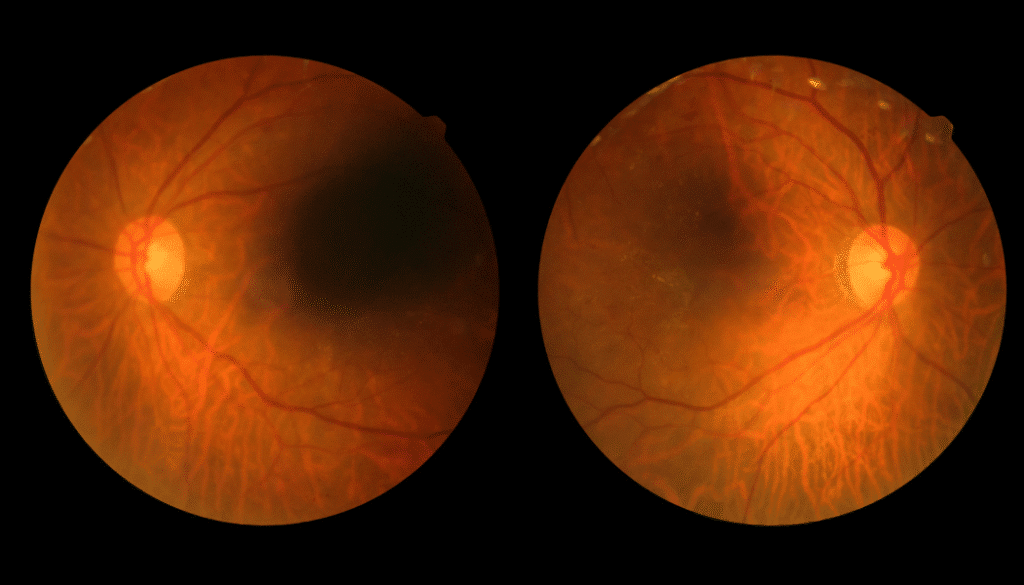
Diabetes is linked to several eye health problems, including cataracts and glaucoma. The most well-known diabetic eye disease is diabetic retinopathy.
Diabetic retinopathy occurs only in people with diabetes. It develops when the fragile vascular network that supplies the retina—the light-sensitive tissue at the back of the eye—begins to swell or leak. The retina is essential for clear vision, so damage to it can cause lasting problems.
In the early stages, diabetic retinopathy may not cause symptoms. This is why yearly diabetic eye exams are critical. Once symptoms develop, they may include black spots, blurry vision, or vision loss that increases over time. These changes are caused by bleeding at the back of the eye, which disrupts the image being sent to the brain.
Whether you have type 1, type 2, or gestational diabetes, you are at risk. The longer you live with diabetes, the higher the risk of developing retinopathy. Keeping your blood sugar under control helps reduce this risk. It is also important to follow your doctor’s advice about diet, exercise, and medications.
At Barnes Talero EyeCare in Nashville, we provide complete diabetic eye disease care. Our team uses advanced methods for retinal health monitoring and vision loss prevention. Treatments may include:
We also work closely with your primary care physician to ensure your overall health supports long-term diabetic vision protection.
High blood sugar affects the blood vessels in the eye. Over time, this can lead to scarring, swelling, or even permanent vision loss. Routine eye checks allow early detection and early retinal damage treatment. This gives you the best chance of keeping your vision safe.
With proper advanced diabetic eye care, many patients maintain good vision for years.
Treatments include laser retinopathy therapy, vitrectomy, and medications to manage swelling or bleeding.
Control blood sugar, keep blood pressure stable, and schedule yearly diabetic eye exams.
Anti-VEGF injections are commonly used to reduce swelling and protect the retina.
At least once a year, or more often if your eye doctor recommends it.