If your child has 20/20 vision but still struggles with reading, writing, or paying attention in class, the problem might not be their eyesight in the usual sense. It could be a vision and learning difficulty. These are problems with how the eyes and brain work together, and they can look a lot like ADHD or a learning disability.
This guide breaks down what these problems are, how to spot them, and what can be done to help. At Barnes Talero Eyecare, we see this come up often with parents who are surprised to learn that a normal eye chart result does not tell the whole story.
What Are Vision and Learning Difficulties?
Vision and learning difficulties happen when the eyes and brain do not team up well during tasks like reading, writing, and math. The eyes might see clearly, but the brain struggles to track lines, hold focus, or make sense of what it sees.
A large part of school work depends on vision. Reading a page, copying from a board, and solving math problems all rely on the eyes moving and focusing correctly. When these skills are weak, even a smart and capable child can fall behind.
The Difference Between Eyesight and Functional Vision
What Is 20/20 Vision?
20/20 vision means you can see clearly at a distance. It is what most school eye charts and basic screenings check. It tells you nothing about how well your eyes track text or work together up close.
What Is Functional Vision?
Functional vision is how your eyes work as a team during everyday tasks. This includes tracking words across a page, focusing on near objects, and switching focus between the board and a desk.
Why Children Can Have Perfect Eyesight but Still Struggle in School
A child can pass a school screening with flying colors and still have trouble with eye tracking, focusing, or eye teaming. These skills are not part of a basic vision check. A pediatric eye exam goes deeper and can catch issues that a school screening misses.
How Vision Problems Affect Learning
Reading Difficulties
Weak eye tracking or focusing can cause a child to lose their place, skip words, or read slowly. They may seem like they are guessing at words even when they know them.
Writing Challenges
Poor visual motor skills can make handwriting messy or uneven. Copying from a board can also be hard if the eyes struggle to refocus between near and far distances.
Attention and Concentration Problems
When reading or close work causes strain, a child’s attention may drift. This is often mistaken for a short attention span, when really their eyes are getting tired.
Classroom Performance Issues
Vision problems can show up as trouble with reading comprehension, slow note taking, and frustration with homework that takes much longer than it should.
Common Signs and Symptoms of Vision Related Learning Difficulties
Reading Symptoms
- Losing their place while reading
- Skipping words or lines
- Using a finger to track text, even at an older age
- Re-reading the same line over and over
Physical Symptoms
- Headaches after reading or homework
- Eye strain or tired eyes
- Frequent eye rubbing
- Excessive blinking during close work
Behavioral Symptoms
- Avoiding reading or homework
- Short attention span during close tasks
- Frustration or meltdowns over schoolwork
Types of Vision Problems That Can Affect Learning
Binocular Vision Dysfunction
This happens when the two eyes do not work together as a team. It can cause double vision, eye strain, and trouble reading for long periods. You can read more about binocular vision dysfunction and how it is treated.
Convergence Insufficiency
This is when the eyes struggle to turn inward for close work. It is one of the most common and most researched vision problems linked to learning struggles.
Accommodative Dysfunction
This means the eyes have trouble focusing, especially when switching between near and far objects. It can cause blur after just a few minutes of reading.
Visual Processing Disorder
This is a problem with how the brain interprets what the eyes see. It can affect letter recognition, spelling, and visual memory.
Eye Tracking Problems
When the eyes do not move smoothly across a page, a child may skip lines, lose their place, or read much slower than their classmates.
Vision Problems vs ADHD: Understanding the Difference
Many signs of vision problems overlap with ADHD, which can lead to mix ups in diagnosis.
| Vision Problems | ADHD |
| Loses place while reading | Easily distracted by surroundings |
| Complains of headaches during close work | Hyperactivity, trouble sitting still |
| Avoids close up tasks like reading or drawing | Acts without thinking, impulsivity |
| Gets tired or frustrated after reading | Trouble staying on task in general, not just close work |
The biggest clue is timing. If a child focuses fine during play or activities far from their face but struggles during reading and writing, a vision problem may be the cause. Some children have both ADHD and a vision problem, so a full evaluation matters before settling on either label.
The Essential Visual Skills Needed for Learning
Eye Tracking Skills
The ability to move the eyes smoothly across a line of text without losing place.
Eye Teaming Skills
The ability for both eyes to point at and focus on the same object at the same time.
Focusing Skills
The ability to keep things clear at different distances, and to switch focus quickly.
Visual Processing Skills
The ability for the brain to make sense of letters, numbers, and shapes.
Visual Memory Skills
The ability to remember what was seen, such as spelling words or math problems.
Visual Motor Integration
The link between what the eyes see and how the hands respond, important for handwriting and copying.
How Vision and Learning Difficulties Are Diagnosed
Comprehensive Eye Exam
This checks overall eye health and how clearly your child sees. It is a good first step and goes beyond a school screening. Many parents are surprised by how much a comprehensive eye exam covers compared to a quick school check.
Functional Vision Evaluation
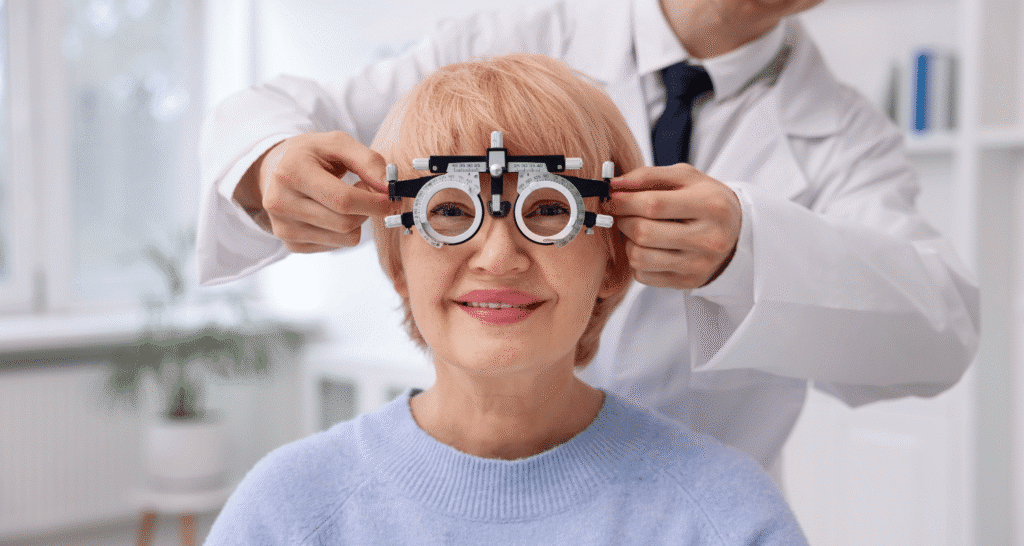
This test looks at how the eyes work together during near tasks. It checks eye tracking, focusing, eye teaming, and other skills tied to reading and learning.
Developmental Optometry Assessment
A developmental optometrist looks at how vision skills connect to learning and development. This type of assessment is useful when reading or school struggles continue despite normal eyesight. The team at Barnes Talero Eyecare can walk you through each step of this process and explain what the results mean for your child.
If your child needs glasses as part of their care plan, options for kids eyewear are worth discussing with your eye doctor.
Treatment Options for Vision Related Learning Difficulties
Vision Therapy
A structured program of eye exercises that builds tracking, teaming, and focusing skills over time.
Corrective Lenses
Glasses or contacts can fix blur, but they do not fix tracking or teaming problems on their own.
Educational Accommodations
Things like larger print, extra time, or seating closer to the board can help while other treatment is underway.
School Support Services
Working with teachers and learning specialists can help a child keep up while vision issues are being treated.
Can Vision Therapy Help Learning Difficulties?
Vision therapy can help when the root cause is a vision skill problem, such as convergence insufficiency or poor eye tracking. It works by training the eyes and brain through repeated exercises, often over several weeks to months.
Many children see improvements in reading speed, focus, and comfort during schoolwork. It is not a cure for every learning issue, but for kids with an underlying vision problem, it can make a real difference in how school feels day to day.
When Should Parents Seek Professional Help?
Watch for these red flags:
- Falling grades with no clear reason
- Headaches that happen mostly during homework or reading
- Avoiding reading or close work
- Double vision or words that seem to move
- Trouble concentrating that gets worse with reading
If you notice these signs, it is worth scheduling an exam soon rather than waiting. Even if your child has had an exam before, regular checkups matter, and the importance of an annual eye exam is worth keeping in mind as your child grows. If you are not sure where to start, our guide on the types of eye doctors can help you find the right fit.
Frequently Asked Questions
Can vision problems cause learning difficulties?
Yes. Problems with eye tracking, teaming, or focusing can make reading, writing, and attention much harder, even when distance vision is normal.
Can vision problems be mistaken for ADHD?
Yes. Many symptoms overlap, such as trouble focusing and avoiding close work. A full eye evaluation can help tell the two apart, or show if both are present.
What is a functional vision evaluation?
It is a detailed test that checks how the eyes work together during near tasks, including tracking, focusing, and teaming. This goes well beyond a standard eye chart test.
Does vision therapy improve reading skills?
For children with an underlying vision problem, vision therapy can improve reading speed, comfort, and focus by training the visual skills reading depends on.
Can a child have 20/20 vision and still struggle with learning?
Yes. 20/20 vision only measures clarity at a distance. It does not test eye tracking, teaming, or focusing, which are all needed for reading and schoolwork.
Who diagnoses visual processing disorder?
A developmental optometrist or an eye doctor trained in functional vision evaluations can diagnose visual processing disorder through specific testing not included in routine eye exams.
Final Thoughts
If your child struggles in school despite normal eyesight, it may be worth looking past the eye chart. A full evaluation that checks eye tracking, teaming, and focusing can uncover problems that standard tests miss. Conditions like myopia can also affect comfort and focus at school, so staying on top of myopia management for kids is part of the bigger picture too. And if your family has a history of eye conditions affecting daily life, our vision rehabilitation program may also be a helpful resource.
Catching these issues early can make a big difference in how your child feels about school, and how well they do once the right support is in place. The team at Barnes Talero Eyecare is here to help you figure out the next step, whether that means a comprehensive exam, a functional vision evaluation, or a referral for further testing.