Not everyone is happy wearing traditional contact lenses every day. Cleaning them, replacing them, and dealing with dryness gets old fast. That is why more people are looking at implantable contact lenses, also called ICL, as a long-term option.
This guide compares ICL vs traditional contact lenses so you can figure out which one makes more sense for your eyes and your lifestyle.
What Are Implantable Contact Lenses (ICL)?
An implantable contact lens is a small lens placed inside your eye by a surgeon. It sits between your iris (the colored part of your eye) and your natural lens.
The most common type is the EVO ICL, also called the Visian ICL. It is made from a material called Collamer, which is a mix of collagen and polymer. This material is biocompatible, meaning your eye accepts it naturally.
The procedure takes about 20 to 30 minutes. It does not remove or reshape any tissue from your eye. That makes it different from LASIK. The lens stays in place permanently but can be removed by a surgeon if needed.
ICL works well for:
- High levels of nearsightedness, up to minus 20 diopters
- Astigmatism (with the EVO+ version)
- People with thin corneas who cannot get LASIK
- Anyone who wants to stop relying on daily lens care
The main downsides are cost, surgical risk, and the fact that not everyone is a candidate.
What Are Traditional Contact Lenses?
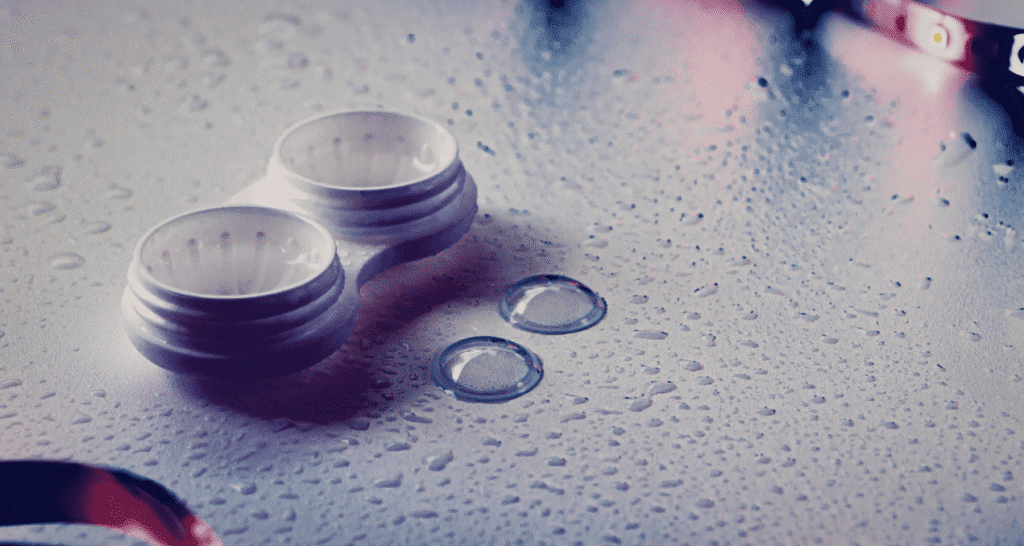
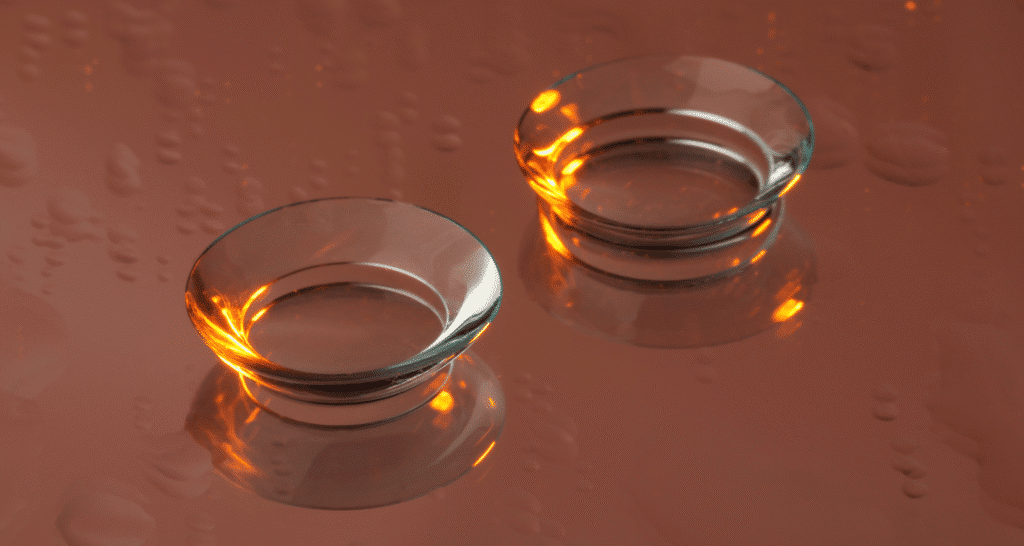
Traditional contact lenses are thin plastic discs that sit on the surface of your cornea. They correct your vision by bending light properly before it enters your eye.
They come in several types:
- Daily lenses, worn once and thrown away
- Bi-weekly lenses, replaced every two weeks
- Monthly lenses, replaced once a month
- Soft or rigid gas permeable lenses
Traditional contacts are flexible and non-surgical. If your prescription changes, you simply get new lenses. They are widely available and cost less upfront.
The downsides include daily maintenance, infection risk, and discomfort for people with dry eyes. If you want to learn more about your contact lens options, visit the contact lens page.
Key Differences Between ICL and Traditional Contacts
Here is a quick side-by-side comparison:
| Feature | ICL | Traditional Contacts |
| Placement | Inside the eye | On the cornea |
| Maintenance | None | Daily cleaning or replacement |
| Comfort | Not felt after placement | Can irritate after long wear |
| Vision Quality | High definition, great in low light | Good, but may vary with high prescriptions |
| Longevity | Permanent (but reversible) | Temporary, ongoing replacement |
| Dry Eye Impact | Does not cause dryness | Can make dry eyes worse |
| Initial Cost | $4,000 to $6,000 per eye | $200 to $500 per year |
| Best For | High myopia, thin corneas | Mild to moderate prescriptions |
Advantages of ICL Over Traditional Contacts
No daily maintenance. Once the lens is in place, you do not clean it, store it, or replace it. You simply wake up and see clearly.
Better for high prescriptions. Traditional contacts struggle to correct very high levels of nearsightedness. ICL can correct myopia up to minus 20 diopters.
No dry eye issues. Traditional contacts sit on the cornea and absorb moisture from your eye. ICL does not touch the cornea at all. This makes it a strong option for people with chronic dry eye.
Preserves corneal structure. Unlike LASIK, no tissue is removed from your eye. This matters for people with thin corneas who are not LASIK candidates.
Built-in UV protection. The EVO ICL blocks harmful ultraviolet rays. This adds a layer of protection against UV-related eye damage over time.
Sharp vision in low light. Many patients report clearer night vision and less glare after ICL surgery compared to traditional lenses.
Advantages of Traditional Contact Lenses
No surgery required. You do not need to go under a blade or into an operating room. Traditional contacts are completely non-invasive.
Lower upfront cost. Daily, bi-weekly, and monthly lenses are affordable to start. Most people spend $200 to $500 per year on contacts and solution.
Flexible if your prescription changes. Getting new contacts when your vision shifts is simple. With ICL, a prescription change may require a new lens or additional correction.
Wide range of options. There are soft lenses, rigid gas permeable lenses, toric lenses for astigmatism, multifocal lenses for presbyopia, and more. You can read about multifocal contact lenses to understand one such option.
No recovery period. You put contacts in and take them out the same day with no downtime.
Who Is a Good Candidate for ICL?
ICL is not for everyone. Good candidates usually:
- Are at least 21 years old
- Have a stable prescription for at least one to two years
- Have moderate to severe myopia
- Have thin corneas that do not qualify for LASIK
- Are in good overall eye health
People with glaucoma, cataracts, or keratoconus may not qualify. Pregnant or nursing women are typically advised to wait.
A full comprehensive eye exam is the first step to finding out if you are a candidate.
Cost Comparison: ICL vs Traditional Lenses
ICL cost: $4,000 to $6,000 per eye. This is a one-time cost. After surgery, there are minimal ongoing expenses beyond routine eye checkups.
Traditional contact cost: $200 to $500 per year. This includes lenses and solution. Over 10 years, that adds up to $2,000 to $5,000. Over 20 years, the total can reach $4,000 to $10,000.
When you look at it over the long term, ICL can actually cost less than contacts for many people. The break-even point is typically somewhere between 8 and 15 years, depending on the type of contacts you use.
Here is a rough long-term cost estimate:
| Timeframe | ICL (both eyes) | Daily Contacts | Monthly Contacts |
| Year 1 | $8,000 to $12,000 | $400 to $600 | $200 to $400 |
| 10 Years | $8,000 to $12,000 | $4,000 to $6,000 | $2,000 to $4,000 |
| 20 Years | $8,000 to $12,000 | $8,000 to $12,000 | $4,000 to $8,000 |
Daily contact lens wearers may actually spend more on contacts over 20 years than ICL costs upfront. You can also compare options like daily vs monthly contact lenses to get a clearer picture of ongoing costs.
Risks and Considerations
ICL risks:
- Surgical complications like infection or inflammation (rare)
- Small risk of elevated eye pressure
- Possible cataract development in rare cases
- Requires a qualified surgeon and proper candidacy assessment
Traditional contact risks:
- Eye infections from improper cleaning or extended wear
- Corneal abrasions from handling
- Worsening dry eye over time
- Protein and deposit buildup on monthly lenses
Research has found that a large portion of contact lens wearers, especially younger users, engage in habits that increase their infection risk, like sleeping in lenses or swimming with them on. ICL removes these risks entirely since there is no lens to handle.
If you have been dealing with ongoing eye irritation from contacts, it is worth discussing your options with an eye care professional. The eye conditions page covers common problems and how they are treated.
Lifestyle Scenarios: Which Option Fits You?
Active person or athlete: ICL wins. No lenses to dislodge, no solution to carry, no worrying about lenses during swimming or contact sports.
Someone with dry eyes: ICL is the better choice. Traditional contacts sit on the cornea and pull moisture from the eye. ICL does not interact with the cornea at all.
Person who travels often: ICL is more convenient. No need to pack solution, lens cases, or extra pairs.
Someone with a mild prescription: Traditional contacts make more sense. The cost and surgical commitment of ICL is harder to justify for low prescriptions.
Person whose prescription is still changing: Contacts are safer here. ICL is best once your prescription has been stable for at least a year or two.
Which Is Right for You?
ICL is a strong option if you have a high prescription, dry eyes, or thin corneas. It removes the daily hassle of lens care and offers sharp, long-term vision correction. Over time, it can also save you money compared to daily lens wear.
Traditional contacts are a good fit if you want a non-surgical solution, have a mild to moderate prescription, or prefer the flexibility of changing lenses as your vision shifts.
The right answer depends on your eyes, your prescription, and your lifestyle. There is no single best choice for everyone.
The best first step is a proper eye exam with an experienced optometrist. They will check your corneal thickness, eye pressure, and overall eye health to tell you which options are open to you. Book a comprehensive eye exam and get a clear answer for your specific situation.
FAQ
What is an ICL and how does it differ from contacts?
An ICL is a lens placed inside your eye by a surgeon. Traditional contacts sit on the surface of your eye. ICL requires no daily care and lasts long-term.
Is ICL safe for high myopia?
Yes. The EVO ICL is FDA-approved to correct myopia up to minus 20 diopters, making it one of the best options for high nearsightedness.
How much does ICL surgery cost?
ICL typically costs $4,000 to $6,000 per eye. This is a one-time cost with no ongoing lens replacement expenses.
Can I still wear contacts after ICL?
In most cases, you will not need to. ICL corrects your vision fully. If needed, contact lenses can still be worn over the ICL in specific circumstances, but your doctor will advise you.
How long is recovery after ICL surgery?
Most people see clearly within a day or two. Full recovery is usually within one to two weeks. A few follow-up visits are needed to confirm everything is healing well.
Which is more comfortable, ICL or contacts?
ICL wins for most people. Once placed, you cannot feel it. Traditional contacts can cause irritation, dryness, and discomfort after long hours of wear.
Ready to find out if ICL or contacts are right for your eyes? Contact Barnes Talero EyeCare to schedule a consultation with our Nashville eye care team.